Aircraft for Charter in Panama
Explore the aircraft used for private charter flights in Panama and find the best fit for your route, group size and luggage.

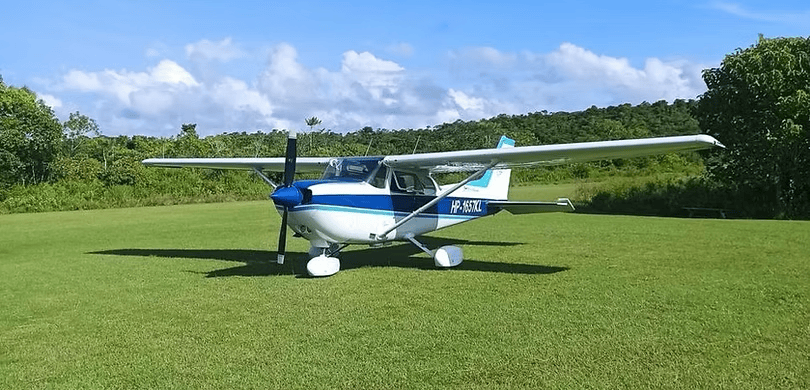


Available Aircraft for Charter in Panama
When you request a flight, one of the first questions we ask is how many people are flying and where you want to go. That’s because the choice of aircraft affects everything: safety, comfort, luggage space, cost and even which runways you can use.
With our aircraft guide, you can:
-
See how many passengers each aircraft can comfortably carry
-
Understand luggage and gear capacity (surfboards, dive equipment, film gear, etc.)
-
Learn which aircraft are best for short coastal airstrips versus longer regional legs
-
Match each plane or helicopter to typical routes in Panama
Whether you’re a couple flying light to the islands or a larger group planning a surf and dive trip with a lot of gear, this page will help you quickly see which aircraft types make sense for your itinerary.


Aircraft for Charter in Panama – FAQ
For Coiba access via Lago Bay Airstrip, we often recommend short-runway capable aircraft such as single-engine planes or turboprops. These are well-suited to coastal airstrips and can carry surf, dive and camera gear within weight limits. Smaller groups can use a Cessna-type aircraft; larger groups or those with more equipment will be more comfortable in a turboprop like the Kodiak.
Bocas del Toro has a longer, paved runway, so you have more options. Single and twin-engine aircraft work well for small and medium groups, while larger turboprops or regional aircraft can be used for bigger parties. If you want to combine Bocas with other destinations like San Blas or Santa Catalina, we usually suggest an aircraft that balances range, payload and runway flexibility.
For most San Blas flights, small single-engine and turboprop aircraft are the best choice. These planes are designed to operate on short, coastal runways and can handle the typical distances between Panama City and the islands. If you are a small group travelling light, a Cessna-type aircraft is usually ideal. For larger groups or extra luggage, a turboprop such as the Kodiak often makes more sense.
It depends on the aircraft, route and number of passengers, but small planes have more limited luggage capacity than commercial jets. As a rule of thumb, we often suggest:
-
Soft bags instead of hard suitcases
-
Packing for carry-on style travel when using small island airstrips
-
Letting us know in advance if you have surfboards, dive gear or film equipment
When you request a quote, we’ll tell you how much baggage your chosen aircraft can realistically carry and whether an upgrade or extra shuttle is advisable.
-
Yes. Weight limits are a safety-critical factor in aviation. The total weight of passengers, luggage, fuel and gear must stay within what the aircraft and runway can safely handle. Giving realistic weights in advance helps us:
-
Choose the right aircraft
-
Plan fuel and route correctly
-
Avoid last-minute repacking or leaving items behind
Our team and partner operators will always prioritise safety first.
-
In many cases, yes, but it must be planned for:
-
Some aircraft can carry shorter boards and dive gear if packed correctly
-
Longer boards or large photography cases may require specific aircraft or a separate gear shuttle
-
Soft board bags and compact dive bags work best
If you tell us your exact gear list (size and quantity), we’ll advise which aircraft are suitable and whether you need extra capacity.
-
You don’t have to choose alone. Simply tell us:
-
Where you want to go (route or destinations)
-
How many passengers
-
Approximate dates
-
Any special luggage or gear
We’ll look at the available charter aircraft in Panama, runway requirements and your preferences, then recommend one or two aircraft options with clear pros and cons for your trip.
-